
新聞稿
Scarless Laboratories 公布第一/二期臨床試驗於疤痕減少的正面結果
Los Angeles, California–Scarless Laboratories, Inc., a biotechnology company with a platform technology in scar reduction and wound healing, announced today that it has completed its First-in-Human Phase 1/2a clinical study for improvement in scar appearance and wound healing in patients undergoing elective abdominoplasty.
Scarless’ platform technology is based on its lead candidate SLI-F06, a novel peptide that had previously demonstrated safety and preliminary effectiveness in large animal models, has now been shown to be safe in humans and to improve the appearance of acute scars in patients undergoing elective abdominoplasty when compared to vehicle control.
In a 22-patient clinical study conducted at 3 Investigative sites in the United States, SLI-F06 treated study arm showed significant improvement in scar appearance when compared to vehicle (placebo). With proof of concept and safety complete Scarless’ clinical plans include further study including dose optimization in abdominoplasty and in scar revision and treatment of Diabetic Foot Ulcers.
“Completion of our first Phase 1/2a clinical study is a major milestone for Scarless” said Dr. Soo “and we look forward to continued development and expansion with our SLI-F06 platform technology to help the millions of people who are burdened with untreated or inadequately treated scars and wounds.”
The economic and physiological burden of scaring is staggering. There are an estimated 12 million traumatic lacerations treated in the U.S. emergency rooms each year, 250 million surgical incisions created worldwide every year, and 11 million burns severe enough to warrant medical treatment worldwide. In the U.S alone, over $20 billion per year are spent on the treatment and management of scars. Scars can be associated with severe psychological, physical, and functional complications that erode an individual’s quality of life. Currently there are no approved drugs or biologics that can adequately address the existing unmet need for effective therapies in the multi-billion-dollar scar and wound healing markets.

關於 Scarless Laboratories, Inc.
Scarless Laboratories is a clinical stage biotechnology company focused on revolutionizing tissue repair and disrupting the billion-dollar scar prevention, scar reduction, and chronic wound healing industries. Scarless was founded by UCLA Professors Drs. Chia Soo, Ting Kang and Zheng Zhong and is located in Los Angeles, California. It is supported by private investors and National Institute of Health (NIH) grants. For more information, please visit www.scarlessLabs.com.
Researchers may have found a way to mitigate or eliminate excessive scarring during wound healing
研究發現
一項於 4 月 12 日發表於 Nature Communications 的研究指出,一種蛋白質可能有助於防止過度疤痕形成。該蛋白質稱為 fibromodulin(FMOD),可與 interleukin-1β形成分子複合體,抑制 肌成纖維細胞(myofibroblasts) 產生過量的疤痕組織。 研究影響
此研究結果可能促成新的治療策略,用以降低或預防過度疤痕的形成,對於因手術、外傷或燒燙傷而恢復中的患者具有潛在臨床益處。 BACKGROUND
In previous studies, the researchers had described the critical role of FMOD in enabling scarless fetal-type repair as well as preventing excessive scarring during adult-type repair. For this new study, the researchers investigated the effects of FMOD on myofibroblasts, a key cell in healing and scar formation. Myofibroblasts should die off after a wound heals, but they can continue forming tissue long afterwards, leading to excessive scarring. The fibromodulin-based complex promotes the death of myofibroblasts.
COMMENT
“Dr. Eric Kang Ting and I have been studying how to reduce skin scarring for the past two decades at UCLA,” said Dr. Chia Soo, professor of surgery and vice chair for research for the UCLA Division of Plastic and Reconstructive Surgery. “This publication explores the crucial role of naturally occurring fibromodulin in regulating a key scar-forming cell, the myofibroblast. This, combined with our team’s FDA-approved clinical study led by Dr. Zhong Zheng using a fibromodulin-derived peptide in 54 patients for scar reduction, demonstrates a significant leap in potential treatments for patients with excessive scarring.”
作者
Study co-authors :
- Wenlu Jiang
- Xiaoxiao Pang
- Pin Ha
- Chenshuang Li
- Grace Xinlian Chang
- Yuxin Zhang
- Lawrence A. Bossong
- Eric Kang Ting
- Zhong Zheng.
FUNDING
• 美國 國家牙科與顱顏研究院(National Institute of Dental and Craniofacial Research)
• 美國 國家關節炎、肌肉骨骼與皮膚疾病研究院(National Institute of Arthritis and Musculoskeletal and Skin Diseases)
• UCLA 臨床與轉譯科學研究所(CTSI)(UL1TR000124)
• UCLA Operation Mend
• UCLA Orthopaedic Hospital
• UCLA Orthopaedic Hospital Research Center
• International Orthodontics Foundation
• 中國博士後科學基金
• 中國重慶市自然科學基金
• 重慶醫科大學未來醫學青年創新計畫 利益揭露
Eric Kang Ting、Chia Soo 與 Zhong Zheng 為 fibromodulin 相關專利(由 UCLA 指派)的發明人。他們亦創立 Scarless Laboratories Inc. 與 Saint Therapeutics Inc.。這兩家公司自 加州大學董事會(UC Regents) 取得 fibromodulin 相關專利的再授權,而 UC Regents 同時持有該公司股權。此外,上述研究人員目前或曾任 Scarless Laboratories Inc. 與 Saint Therapeutics Inc. 的管理職位。
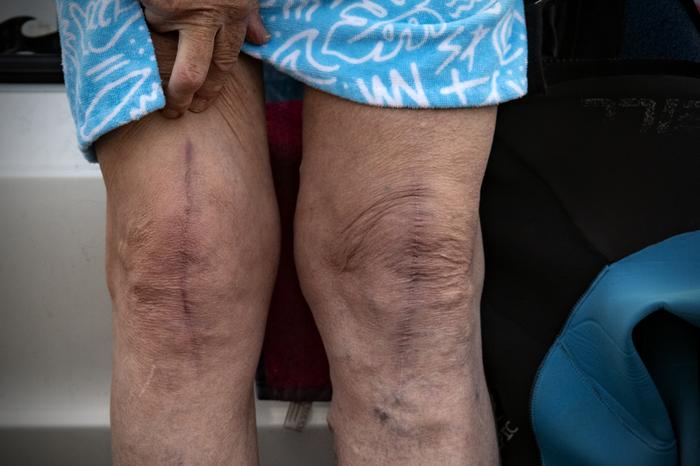
新型治療策略有望消除唇顎裂修復手術後的過度疤痕
Somerville, Mass., 05/07/2025 – Cleft lip and/or cleft palate are among the most common craniofacial birth defects in the United States. These conditions, collectively referred to as orofacial clefts, occur when a baby’s lip or mouth do not form properly during pregnancy.
當口顏裂透過手術進行修復時,常會產生一種隆起且增厚的疤痕,稱為 肥厚性疤痕(hypertrophic scar)。此類疤痕可能造成外觀變形並影響功能,對患者帶來重大的社會與經濟影響。
近期由 ADA Forsyth Institute(AFI) 與 加州大學洛杉磯分校(UCLA) 科學家合作進行的一項研究指出,一種前沿的新型治療方法可能能夠減輕甚至預防過度疤痕形成,為傷口癒合與再生醫學領域帶來重要突破
Scars are an important part of the body’s natural response to injury to wall off the injured site from normal tissues. During healing, scars are replaced gradually with healthy tissues. However, in abnormal healing, excessive myofibroblasts – cells that produce and organize collagen and play a key role in wound healing – and other abnormal activities can lead to excess scarring that does not heal normally.
研究團隊成員包括 AFI 兼任教師 Eric Kang Ting, D.M.D., D.Med.Sc.,以及 UCLA 研究人員 Chia Soo, M.D., Pin Ha, D.D.S., M.D.以及 Zhong Zheng, Ph.D. identified a molecule – fibromodulin (FMOD) protein – which works to maintain a balanced level of myofibroblasts, resulting in minimal scarring at the surgical site. The scientists detail this mechanism in a new paper published in Nature Communications.
“Our team has been exploring ways to improve scarring from cleft lip repair,” said Dr. Ting. “We have identified a new peptide drug derived from fibromodulin that may help reduce scarring. This publication demonstrates the broader role of fibromodulin in regulating a key cell involved in scarring: the myofibroblast.”
在如唇裂縫合等組織閉合手術中加入 FMOD(fibromodulin),可防止過度疤痕形成。此方法亦可能成功預防蟹足腫(keloid scars)的產生。蟹足腫是一種疤痕類型,其特徵為疤痕組織過度生長,並超出原始傷口邊界。
“By targeting the biology of scarring at the molecular level, this breakthrough has the potential to transform outcomes for patients undergoing cleft repair and other surgical procedures,” said AFI chief science officer and chief operating officer .. “This powerful translational science brings fundamental biological insights to clinical care and would not have been possible without critical funding support by NIH.”
“Dr. Ting and I have been studying how to reduce skin scarring for the past two decades,” Dr. Soo said. “This recent breakthrough describing how fibromodulin may reduce excessive scarring through controlled cell death demonstrates a significant leap in potential treatments for patients with excessive scarring.”
The research offers a shift in perspective toward minimizing scarring and improving clinical outcomes in cutaneous wound repair. Dr. Zheng said, “in this study, we demonstrate that fibromodulin, a matricellular proteoglycan, accelerates the clearance of myofibroblasts without disrupting initial wound repair, providing a new mechanism to minimize scarring.” Dr. Zheng leads an FDA-approved clinical study currently in Phase 1/2A using a fibromodulin-derived peptide.
鄭博士表示:「在本研究中,我們證明 fibromodulin(屬於一種 matricellular proteoglycan)可在不干擾初期傷口修復的情況下,加速肌成纖維細胞(myofibroblasts)的清除,從而提供一種新的減少疤痕形成機制。」
This work was funded by :
- NIH NIDCR R44DE024692 (to C.S. and Z.Z.)
- SB1DE026972 (to K.T., C.S., and Z.Z.)
- NIH NIAMS R44AR064126 (to C.S. and Z.Z.)
- UCLA CTSI grant UL1TR000124 (to C.S.)
- UCLA Operation Mend (to C.S.)
- UCLA Orthopaedic Hospital (to C.S.)
- UCLA Orthopaedic Hospital Research Center (to C.S.)
- International Orthodontics Foundation.
“Fibromodulin selectively accelerates myofibroblast apoptosis in cutaneous wounds by enhancing interleukin 1β signaling,” Nature Communications. DOI#1038/s41467-025-58906-z
The ADA Forsyth Institute was founded in 1910 as the Forsyth Dental Infirmary for Children (later, the Forsyth Institute), to provide dental care to the disadvantaged children of Boston. While continuing to serve children in need, yet recognizing the ultimate goal is to prevent dental disease, the Institute in 1915 began to focus on scientific research and is today the world’s leader in oral health research. In October of 2023, the Institute joined with the American Dental Association to form the ADA Forsyth Institute, a 501(c)(3) entity dedicated to improving people’s oral and overall health and powering the profession of dentistry through cutting-edge basic research, creative translational science, innovative clinical technologies, and global public health outreach. Consistent with the Institute’s founding mission, the ADA ForsythKids mobile dental program continues to serve children in need.
新發現的蛋白質可能在傷口癒合過程中減少或消除過度疤痕形成
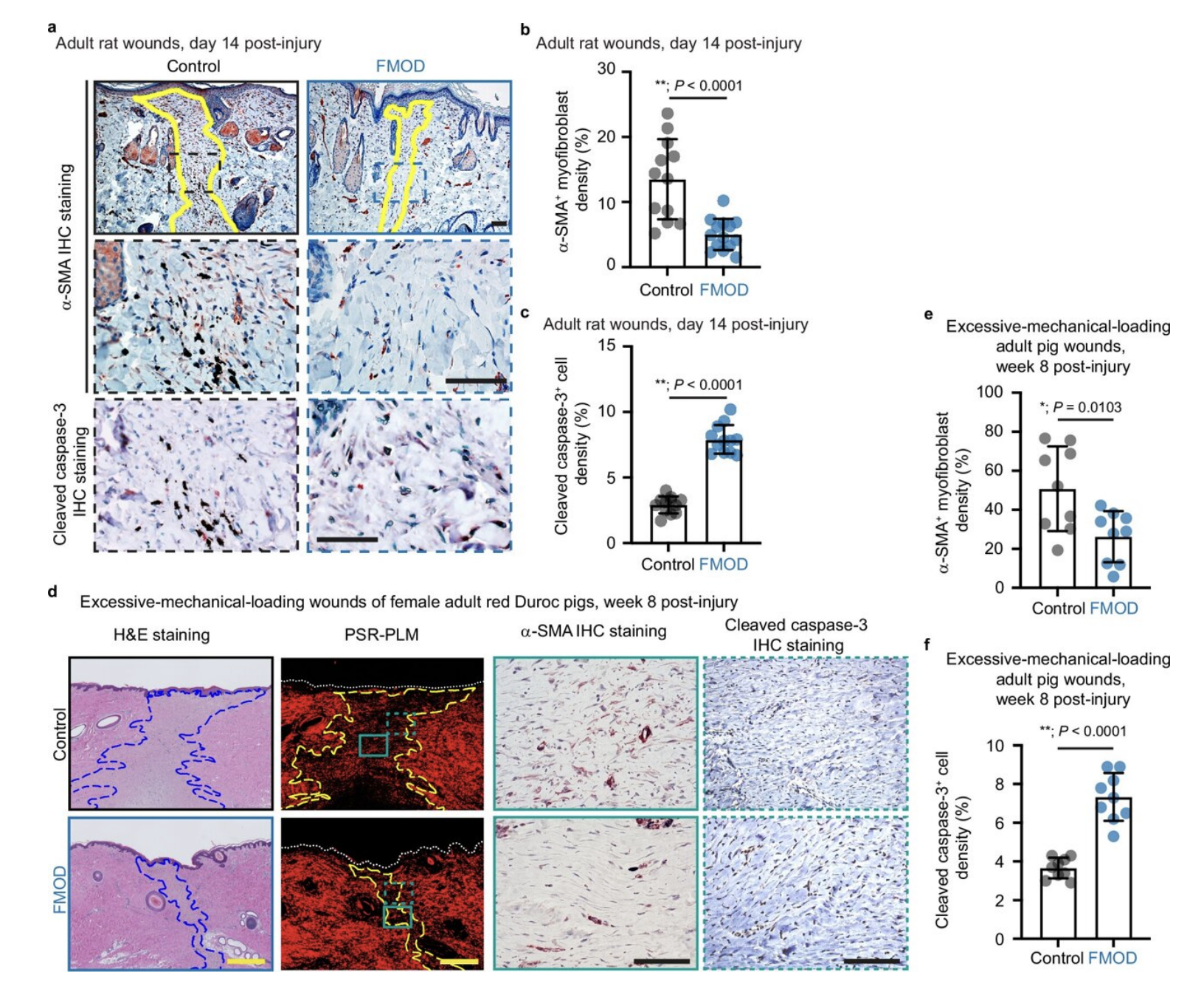
Fibromodulin (FMOD) accelerates myofibroblast clearance in rat and pig models with reduced scar formation. Credit: Nature Communications (2025). DOI:10.1038/s41467-025-58906-z
A study published April 12 in Nature Communications identifies a protein that helps prevent excessive scarring. The protein, called fibromodulin (FMOD) forms a complex of molecules with interleukin 1β that stops myofibroblasts from forming excessive scar tissue.
The findings could lead to a new way to reduce or prevent excessive scarring, which could benefit patients recovering from surgery, injuries, or burns. In previous studies, the researchers had described the critical role of FMOD in enabling scarless fetal-type repair as well as preventing excessive scarring during adult-type repair.
For this new study, the researchers investigated the effects of FMOD on myofibroblasts, a key cell in healing and scar formation. Myofibroblasts should die off after a wound heals, but they can continue forming tissue long afterwards, leading to excessive scarring. The fibromodulin-based complex promotes the death of myofibroblasts.
“Dr. Eric Kang Ting and I have been studying how to reduce skin scarring for the past two decades at UCLA,” said Dr. Chia Soo, professor of surgery and vice chair for research for the UCLA Division of Plastic and Reconstructive Surgery.
“This publication explores the crucial role of naturally occurring fibromodulin in regulating a key scar-forming cell, the myofibroblast. This, combined with our team’s FDA-approved clinical study led by Dr. Zhong Zheng using a fibromodulin-derived peptide in 54 patients for scar reduction, demonstrates a significant leap in potential treatments forpatients with excessive scarring.”
Study co-authors are :Wenlu Jiang, Xiaoxiao Pang, Pin Ha, Chenshuang Li, Grace Xinlian Chang, Yuxin Zhang, and Lawrence A. Bossong, Eric Kang Ting, and Zhong Zheng.
More information: Wenlu Jiang et al, Fibromodulin selectively accelerates myofibroblast apoptosis in cutaneous wounds by enhancing interleukin 1β signaling, Nature Communications (2025).
DOI: 10.1038/s41467-025-58906-z Provided by University of California, Los Angeles
Citation: Newly identified protein could mitigate or eliminate excessive scarring during wound healing (2025, May 6) retrieved 29 January 2026 from https://medicalxpress.com/news/2025-05-newly-protein-mitigate-excessive-scarring.html
傷口癒合相關研究計畫之合作
NIH R21DE015118 Role of Fibromodulin in Scarless Repair
NIH R43AR064126 A novel anti-scar peptide for cutaneous wound repair
NIH R43AR063558 Safety and efficacy testing of novel anti-scar peptide vs corticosteroid for scar
NIH R44DE024692 Anti-scar peptide for cleft lip repair
NIH R44AR064126 A novel anti-scar peptide for cutaneous wound repair
NIH R44DE026080 Novel peptide-coated suture for cleft lip and palate repair
NIH SB1DE026972 Anti-scar peptide for cleft lip repair
NIH U24DE026914 Center for Dental, Oral, & Craniofacial Tissue & Organ Regeneration (C-DOCTOR) 2017 Spring ITP Team Award
Peptide-impregnated hydrogel system for improving cleft lip and palate wound healing.
Plastic Surgery Foundation Translational Research Grant (#571906) A peptide-impregnated gel for accelerating wound tensile strength reestablishment.
NIH R44DE026080 Novel-peptide-impregnated hydrogel as a wound healing device
NIH R44DK131648 Novel peptide for enhancing diabetic wound healing