
Technology
SLI-F06 is based on over 20 years of research into scar-free fetal wound models. This work led to the discovery of a novel fibromodulin (FMOD)-based peptide that targets scars before they form. SLI-F06 is a synthetic peptide drug that reproduces FMOD’s anti-scar effects.
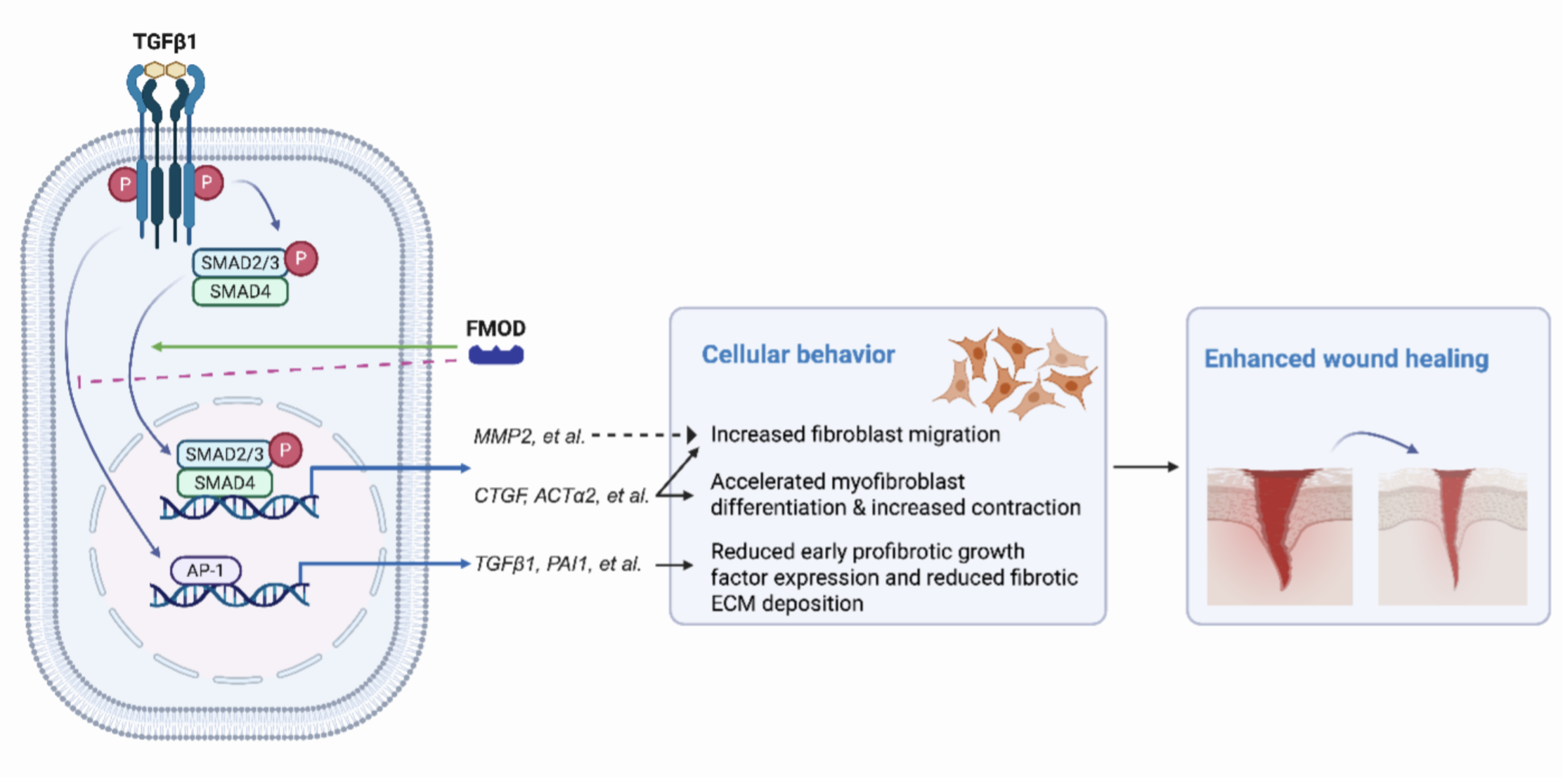
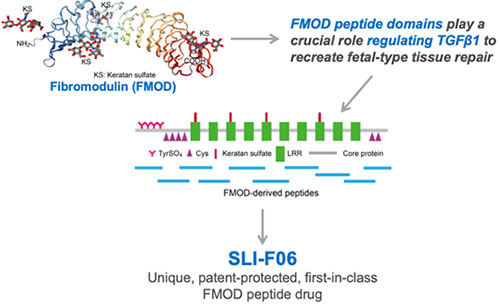
After intense study of FMOD’s structure and function, SLI-F06 was created as a synthetic peptide drug to specifically mimic FMOD’s dual effects to both promote and inhibit TGFβ1 signaling to reduce scar and to promote healing. SLI-F06 activates fibroblasts, the main cell-type responsible for skin and soft tissue healing. As a result, fibroblasts get to the wound faster to start healing faster to lessen the wound gap. SLI-F06- activated fibroblasts also differentiate faster into myofibroblasts to start contracting the wound to make it heal faster and stronger (higher breaking strength) and contracting the scar to make it smaller. At the same time, SLI-F06 also reduces ECM production to reduce scar tissue formation.